How A Mid-January Dinner recalls my first Indy 500

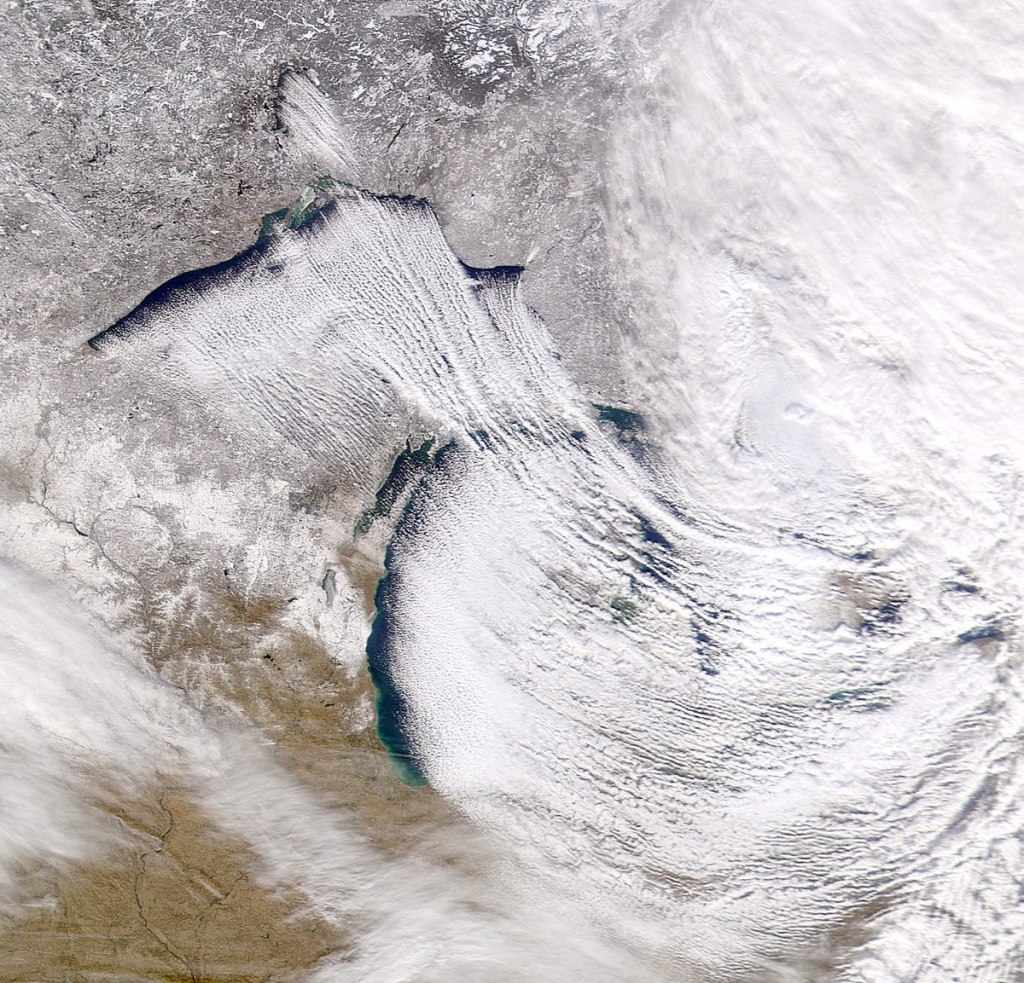
Lake-effect Winter Satellite Image (c) Wikipedia Commons

January and February in northern Indiana is sometimes referred to as “character-building” season.

Given the proximity to the Great Lakes, and Lake Michigan in particular, this time of year seems hopelessly lost in a cold, hazy-grey arctic embrace that recalls a seven-year-old’s unwanted holiday hug from an over-perfumed, slightly-frightening aunt that hasn’t seen you since you “were thiiiis tall”. You’re going to get that embrace regardless and to feign appreciation for the once-a-year relationship is to have nearly given up hope on better circumstances altogether.

So it goes with Indycar (or any other warm-seasoned activity) appreciation and winter in northern Indiana.

A generation ago, the phrase “he’s a real character” was a slightly derisory description, if not an outright warning, to others for someone who has a penchant for shenanigans. This is not the type of “character” that gets built during this season, however there may be a corollary with the term “cabin-fever” that I’ll not probe today.

During “character-building” season, with the exterior temps chilling our bodies, we often look to warm ourselves from the inside and a heaping bowl of chili amid the depths of a January evening is a rather suitable dinner. I did just that last night. My wife assembled the chili and cornbread which is now a staple food of our winters. Lower on bean count, higher on diced tomatoes, onions, and beef (sorry vegetarian/vegan/keto friends), it is a treasured little family mix that never fails to satisfy. When I saw the spent box of Jiffy cornbread mix on the counter, I was briefly whisked away to warmer days and my first Indy 500 in 1979.

The #46 Sherman Armstong entry for the 1979 Indianapolis 500 Mile Sweepstakes was a used Wildcat-Offy slated for 5-year veteran of Atlantics and Super-Vees, Howard “Howdy” Holmes. Howdy was a fairly accomplished young driver of the American open-wheel ladder whose liveries most often carried the family business brand – Jiffy Mixes of the Chelsea Milling Company, in Chelsea, Michigan. Although I’ve yet to confirm the fact, I’m fairly certain that Mr. Holmes has also shared the magic of chili and cornbread together in his locale of Michigan which would also be subject to lake-effect winters.

(c) IMS Archives

Just like Howdy, my first Indy 500 was in 1979 and the sensations of that day are still palpable to me as I’ve written about previously in this blog. Also easy for me to recollect was my pure and naïve disbelief in my father’s assertion that this car (the #46) was sponsored by a baking mixes company.

He assured me in his factual knowledge, and I was equally inclined to not believe him for all of racing is to be filled only with the stuff of rugged relation – automotive parts, petroleum companies, cigarettes, and beer. Even Janet Guthrie had a Texaco car. Surely my father was incorrect and a baking mixes company couldn’t adorn the front of one of the fastest 33 cars in the greatest race in the world. To whom could they possibly be advertising – these ne’er-do-wells populating the interior of the racetrack?

Certainly not.

Of course at some point, I had to take my father’s serious and insistent word and I found myself looking for that car all day long. It was also part of two-car stable entered by Sherm Armstrong so the liveries were fairly easily tracked – the #44 of Tom Bigelow and the #46 of Howdy Holmes were primarily black with larger white numbers and a smaller yellow and orange trim stripe. The broad nose of Howdy’s Wildcat was easy spot at a distance and so I was able to follow him all day.

Howdy’s career at Indy is notable. His performance in 1979 – 13th starting position (only rookie to qualify), and 7th place finish only bettered by the likes of Mears, Foyt, Mosley, Ongais, Bobby Unser, and Johncock, garnered him the Rookie of the Year honors. His performance allowed him to follow up a month later at Pocono for another 500-miler, starting and finishing a very notable 7th.

For 1980, he was brought on full-time for the team and was slated to help develop their new Orbiter ‘ground-effects’ type chassis. A detailed first-person article exists of that rather fascinating story here.

Howdy Holmes, Armstrong Orbiter Chassis, (c) unknown

Success came in waves for Howdy as he moved from team to team. He left the Armstrong Mould (AMI) racing team after 1980 and did not participate in Indycar racing altogether in 1981. For 1982, Howdy joined up with the brand new Doug Shierson Racing Team as the original driver of the now-famous #30 Domino’s Pizza livery through 1983.

Howdy had a very respectable and rather consistently-performing career in Indycars including a career best finish of 2nd at Phoenix and barely a month later, started middle of the front row at Indy in 1984 for Mayer Racing, back with the Jiffy Mix livery/sponsorship in a current March-Cosworth. He moved to Forsythe Racing with the Jiffy Mix brand in a 1985 Lola-Cosworth.

Passing on the 1986 and 1987 seasons, Howdy returned for one more season with Jiffy Mixes and Morales Racing in 1988, again racing a current March-Cosworth, finishing his career with the 26th and final career Top 10, finishing 8th at Tamiami Park.

1988 – Howdy Holmes March Cosworth, (c) IMS archives

According to ChampCarStats.com, Howdy’s career in the top-flight of open-wheel racing in America is rather notable for his considerable ability to finish higher than he started and on the variety of tracks presented by CART in the mid-1980s. Of his 82 career Indycar starts, he only lost places from his starting position 1 in 4 races. The record shows that most often, those drops were less than 5 positions. He finished in the top-10 in 26 of 82 starts.

After his retirement from racing, he returned to Chelsea Milling Company, authored a book on motorsports technology, formed a motorsports marketing and advertising firm, and eventually replaced his father as President and CEO of Cheslea Milling, where he still works today.

So, if you ever find yourself in the depth of winter, heading into the supermarket eyeing up the corn muffin mixes to match up with your chili or a cupcake mix for your next Indycar watch party, don’t forget about the endearing Indycar driver Howdy Holmes, and his family’s Jiffy mix.
Much Ado About Liveries

What is it about liveries that adds to the enjoyment of auto racing?

If you’re anything like me, when an off-season wanes and a new season approaches, I appreciate any and all visual coverage of pre-season activity. New images are the desperately-needed salve from the abrasively long off-season. While the sounds from video clips are often familiar and quite welcome, one thing changes more frequently than any other piece in our autosport appreciation – the livery.

During the recent IMSA Roar Before the 24, dutifully placed in the first week of the new calendar year, North American racing fans get their first glimpses of new sports car liveries in action. Often this time of year will include new pronouncements of sponsors and drivers and promotional plans for the upcoming season. Sports cars provide a generally larger substrate for design and history shows us how memorable and popular those can be.

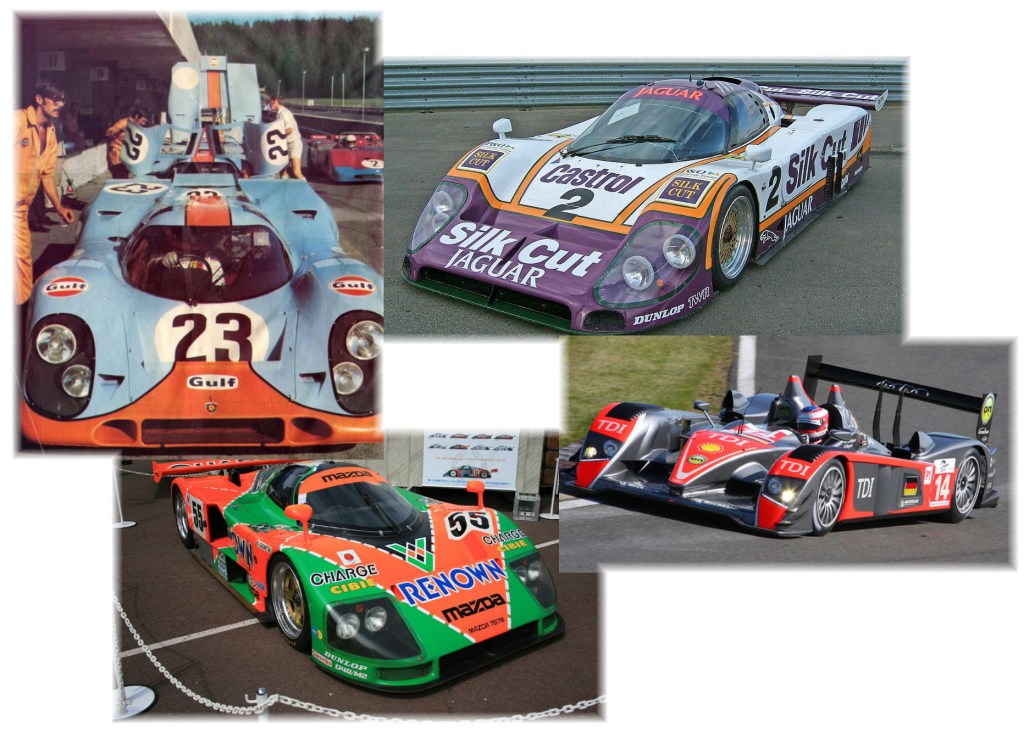
When I say “Silk Cut Jaguar” or “Audi R10 TDi” or “Gulf Oil Porsche 917” or “Mazda 787”, immediately images of a famous and often race-winning livery pop into my head. It’s those things, shared with others around the globe that makes more communal and intimate the experience of autosport enjoyment. The more famous the event/circumstance, the more recalled the livery. Winning, or sometimes merely striving valiantly in incredible situations, often is the momentous situation that places an indelible visual representation of that moment and machine and humans in our brains.

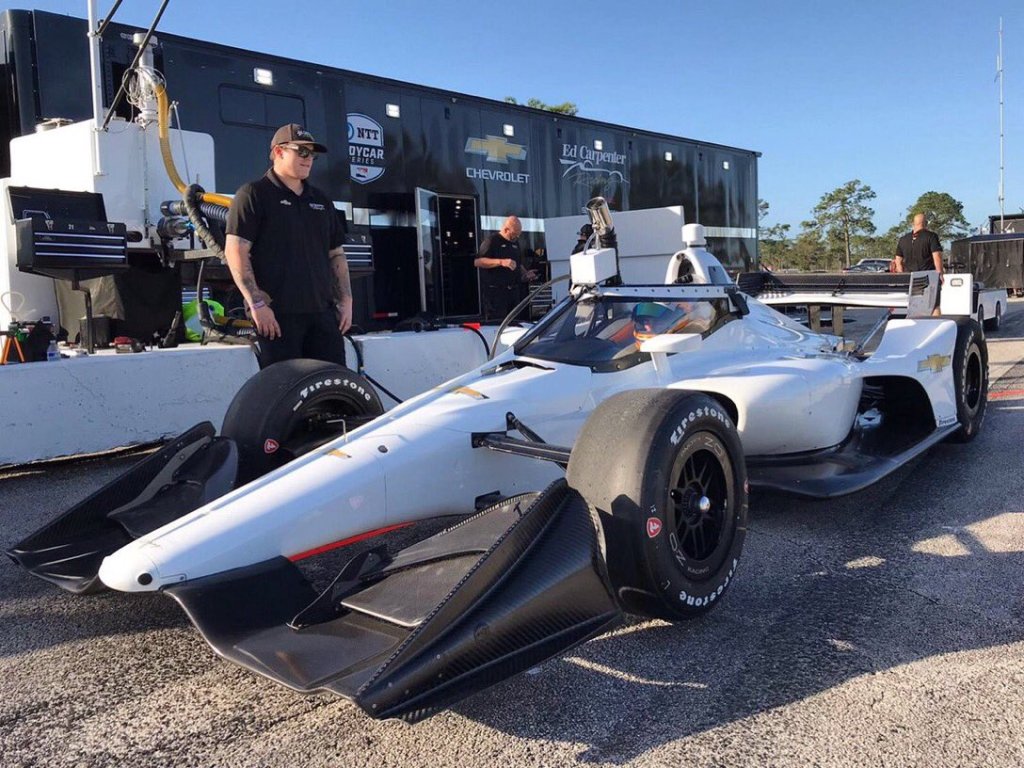
In the second week of 2020, my focus shifts toward Indycar at Sebring for spring testing sessions. 2020 brings a fairly radical new look owing to the advent of aeroscreens. This welcome safety feature also becomes the moment in history that notably alters what we consider a modern Indycar. I imagine a time, even just month from now when a IR15 Dallara without the aeroscreen will seem oddly spartan and exposed.

Regardless, the new era of Indycar is upon us in several ways and as information trickles out of testing, including new entries, sponsors, and liveries, my appetite for the upcoming Indycar season only becomes more ravenous following the off-season hibernation we experience. How will the new aeroscreens add to the livery design? The blank canvas has a new shape.

(c) 2020 Ed Carpenter Racing (via Twitter)

While we often celebrate a renown livery on modern vehicles in tribute, so much that one sanction even takes to throwback livery races, I still feel the classics of tomorrow come from today. In 2019 I noted how well the liveries were done in Indycar from top to bottom of the field, and the artists of today are doing a great job on a difficult substrate, creating some legendary liveries I imagine we’ll regale in 2030.

Often, it’s the events that transpire that influence favor on our recollection of the liveries which will live far beyond their racing life. Even as recently as 2016, the modern and (expected to be) one-off NAPA livery for Alexander Rossi became so memorable from his Indy 500 win, and subsequent exposure, that it now sits among the most recognized, staple sponsors of the modern Indycar era.

As we await more official liveries and note changes to existing ones provided by the aeroscreens, what are some of the newer IMSA or Indycar liveries of 2019 and 2020 that most quickly come to the top of your mind? Like NAPA, which do you see as ‘instant classics’?

Let me know what pops into your mind’s eye first…

2020 To-do List #1 – Update Racing Calendar

The Penske era of IMS and Indycar has officially begun. How RP still manages so many irons in the fire is truly notable and commendable. I can barely manage when to have lunch during any given day and this octogenarian is quite admirably slaying racing dragons at 6:45am.

I was able to find RP’s google calendar and it shouldn’t surprise anyone it looks like this:

(not in fact RP’s google calendar)

With the advent of the Roar before the 24 kicking off last week, I felt it was time to review and make some plans for enjoying the 2020 racing season. The ‘why?’ is a rhetorical question, but the ‘who?’, ‘what?’, ‘where?’, and ‘when?’ were still up for grabs aside from my annual pilgrimage to Indy in May.

“2020 WILL BE DIFFERENT!” I declared at the end of the 2019 racing season, having failed to plan, my race attendance and watching plan rightfully failed. Of course there were several expected life events I knew would belay my ability to plan for much of anything during the summer of 2019, outside of May. Nevertheless, we march on into 2020 and I need the various calendars of the racing sanctions I follow all in one place. Certainly this will be a rather easy task to complete…

Finding all of the major racing sanctions event calendars is not at all an easy task for the layperson. After some consultation with several racing friends about the internet, I found almost right under my aging proboscis what may be the best fit for my purposes. A good friend of the site and on twitter as well, Pat from @toomuchracing has just what you need HERE! If you also prefer to organize your calendars and keep them via Google, iCal, and the like, this should be your first stop (and may likely be your only).

I’ve subscribed to just as many (or as few) as I need, but the temptation is to basically overwhelm my senses and visual calendar with different sanctions and events despite knowing I’ll never have time to watch them all.

Pat eagerly puts in a considerable bit of time and effort to this endeavour and it shows. I gladly clicked his PayPal donation link on the upper right of his blogsite and I suggest you do as well if you take advantage of the massive amounts of time and effort he will save you.

There are a few other sites that I found, and if you are interested in being able to tell your friend in Sydney, Australia on what channel and time the Dakar Rally is being shown on SBS, or finding the time and location of the stream of qualifying for the F3 Asian Championships at the Autodrome in Dubai, THIS GOOGLE DOC may be your best bet.

Best to all on your racing season planning and I hope to see you at the track in 2020!

PS: Also, I’d like to spare a moment to extend my deepest sorrow and sympathies for the tragic fires that are consuming Australia now. We pray to the universe for a swift end to, and restoration from, the vast destruction they’re experiencing.