There, Now Don’t You Feel Better?

I don’t know about you, but I always feel better after the first Indycar race of the season. 


The Firestone Grand Prix of St. Petersburg has really grown on me as the season opener. The first Indycar race is always an indicator (especially here in Northern Indiana) of the impending warmer days and excitement to come.

Even just seeing the race logo is a warming and welcome sight after surviving another ‘character-building’ season of a Great Lakes winter.  

Several years ago, written in my now-defunct personal all-purpose blog, I noted how much I enjoy this time of year, not only for the budding and greening of my environment, but also with a great run following the sports that I enjoy most – Indycar season opener, the NCAA basketball tourney, more Indycar, The Masters, The Kentucky Derby, and the Month of May all together is really a great way to emerge from the hibernation I’ve been in most of the winter months (especially when I’m also quite busy with my kids who are competitive swimmers and their season runs from September through March).

At any rate, I found this latest version of Indycars racing at St. Pete was quite satisfying.

Like a sort of homecoming – seeking comfort in experiencing a range of emotions from seeing all of the things that you’ve come to rely upon every year:
– ABC performing up to their typical levels (with Bestwick well-exceeding that standard despite being under the weather).
– A-bumpity-tip-tap we go through turns 1, 2, and 3 of lap one.
– Somebody suffers a cut tire on lap one.
– A solemn nod to Dan Wheldon.
– Somebody makes Turn 4 into a confetti-shower of carbon fiber.
– Marco unsuccessfully divebombs someone into turn one and ruins his own day.
– Penske dominates the first race weekend.
– Fans watching on TV are reminded how many damned ads they’ll be seeing even in side-by-side mode.
– Some drivers take umbrage with other drivers because of something on track.
– Ultimately drivers and fans all getting their race-legs under them for the season.


In a typical year, I’d have made predictions for the season by now. This year, I don’t feel the need to prognosticate. I’m just going to sit back and see how it all unfolds. Last year gave us a great deal of (mostly) on-track drama. Too much on the injurious side however, so here’s to hoping for a much safer 2016 season that gives us the racing action and drama that we all crave.

Oh alright, fine. I’ll make one prediction with a big qualifying statement – Indycar, provided that management stays unobtrusive for all of the right reasons, will enjoy another year of solid growth and the racing gods will see to it that the 100th Indy 500 will give us something rather spectacular and remind us again why we endure the hardships of this sport.

(c) 2016 Indycar


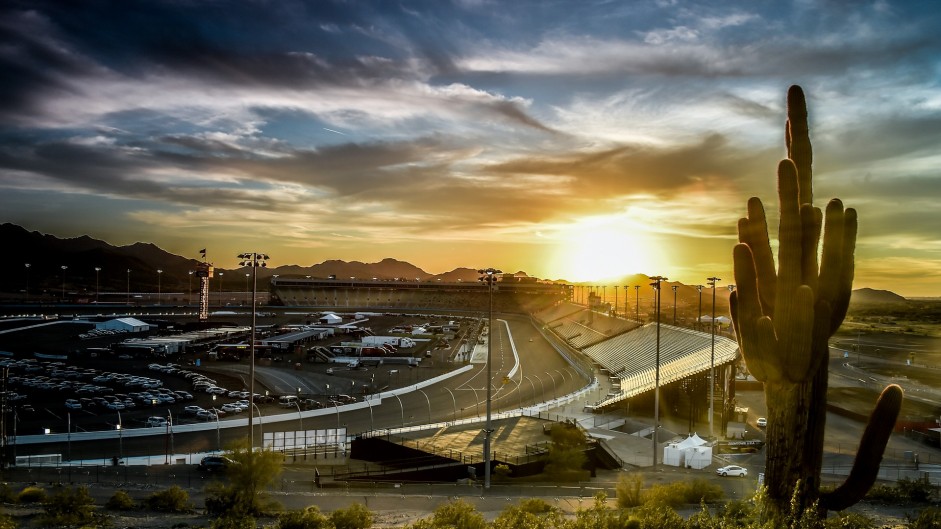
OK Phoenix, you’re next. I couldn’t be happier about you hosting Indycars again.

Let’s see what you’ve got…

The Last Of The Mohicans

In the second book of James Fenimore Cooper’s 5 novels comprising The Leatherstocking Tales, the character of Uncas is known as the last full-blooded member of the Mohican tribe of Native Americans who becomes allied within other tribes through marriage and also becomes a valued ally of the British forces in their skirmishes with the French over land in what is now known as Connecticut of the American colonies. Eventually as we know, the Mohicans as well as the other ancient tribes of America were killed off or assimilated into the new world.


With the recent news about the financial contractions of the CFH Racing team in this Racer.com article, it revealed to me that team owners Carpenter and Sarah Fisher remain the last active team/driver link to the Midgets and Sprint Car connection to Indycars. The last few of the once native and productive link from the small tracks of USAC to the top level Indycars.

It pains me to see this ‘last Mohican team’, backs to the wall, with massive odds against them, fight to survive. Their brightest driving talent, Josef Newgarden, will also perhaps struggle with results from a team struggling to merely pay the wages.

Much has been made of that once direct pipeline to the biggest race in the world having been essentially severed with the competitive malfeasance of USAC and the advent of CART.  The glory days of running sprints, midgets, and Champ Cars (Indycars) is only a memory for those old enough to also recall a time when Indycars first sprouted wings or when Richard Milhouse Nixon occupied the office that many candidates currently seek. I’m loathe to admit that I am old enough to recall those things and yet I’m merely at the tail end of that generation.

Indycar, and the last vestige of it’s Golden era connection to the mighty USAC river of talent that rushed forth with names like Vukovich, Ward, Foyt, Bettenhausen, Rathmann, Jones, McCluskey, McElreath, Kinser, Kenyon, Leonard, Johncock, Rutherford, Unser, et. al., is on the verge of being just a tiny stream that finally dries up.

For me, I’m honestly sad to see it come to this, but on the day that USAC and CART finally and terminally agreed to disagree, I suppose this day had to come. Many have spoken about the fear of a significant drop in attention to this sport after this season. Perhaps fitting that the grand 100th Indianapolis 500 mile race may be the last that actually includes that long link to the past.
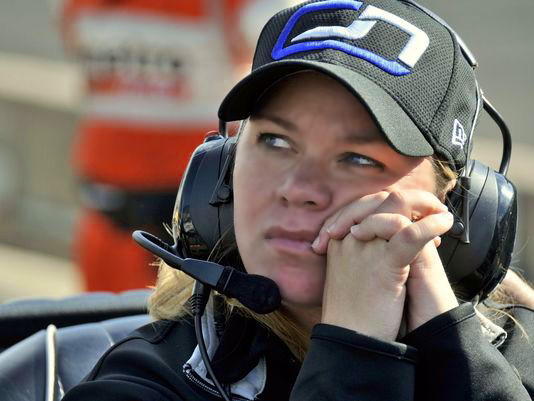
So when considering someone to cheer for this year, I challenge the fans not to change your support from your favorite as before, but let’s also keep a positive thought and cheer for ol’ number 67 – Josef Newgarden – and his team owner, the last of the Mohicans, Sarah Fisher.


Edit: and just hours after posting the above article, it was publicly announced that Sarah Fisher’s and Wink Hartman’s ownership in the CFH racing team has been absorbed into Ed Carpenter Racing effective immediately. Newgarden will drive the Number 21 and Carpenter the Number 20 for ECR for 2016. 

Fare thee well Sarah. We’ll miss you and the 67 in Indycar.

Not Good Enough


It doesn’t seem so very long ago when we were all left in stunned disbelief following the death of Dan Wheldon, October 16, 2011.


Maybe it’s because it hasn’t been that long really. 

Now resigned to the terrible result of another all too fateful moment on Sunday, I finally had to take a moment away from my work duties this morning to read what I wrote in the hours (of shock and disgust with the sport) and days (of ‘Indycar family’ and hope) following Wheldon’s death. 

Seeing the television footage of the helicopter rising from its mid-track perch at Pocono on Sunday was an all too familiar scene and one that left me suspended between disbelief, despair, and hope. 

I told my kids this morning about Justin dying before they left for school. Certainly far from ideal timing but I also I didn’t want them to not hear it from me. 
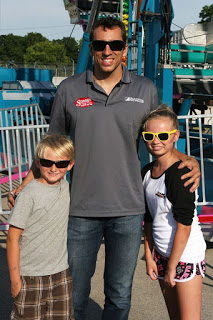
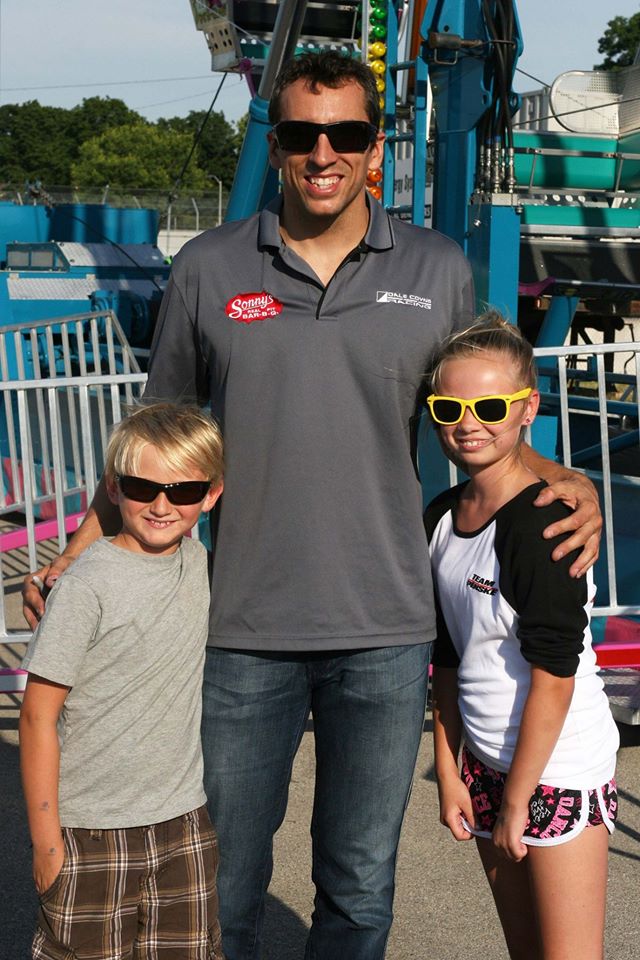
Nick, Justin, Ellie. Milwaukee 2012.
Photo: (c) Lynne Zehr
My daughter is a casual fan who could name several drivers and recognize a few by face. My son has a bit of deeper interest and knows most every car and driver visually. In the case of Justin Wilson, he represents a rare moment that they both shared with him in Milwaukee back in 2012. 

He had just finished a TV report of his riding the Milwaukee Indyfest ferris wheel with a young fan and was heading back to the paddock. We just happened to be walking nearby and asked for a quick photo opportunity with him which he so graciously, and so ridiculously-commonly, obliged. 

That was over three years ago and while my kids have grown so much when compared to the picture, they both remember this moment quite vividly and fondly. Both were saddened to hear the news I had to share with them this morning. 

I was equally sad to have to deliver it.

Having just surpassed my recent “Gurney Eagle/Jerry Karl/Foyt’s third entry” birthday, each year seems to bring more energy into my brain for more existential pondering – “what, if any, is the purpose and meaning of life?”

You may have also read my recent post with the same question bent specifically toward the sport of Indycar. Having little remaining hope that Indycar will ever be any sort of genuine ‘innovative and working future-thought laboratory’ for auto manufacturers as I’d dream, I have finally come to grips that this sport is set-up primarily as an entertainment vehicle which sells thrills and tradition and nostalgia in direct support of the Indianapolis 500 and the benefit of those who own the event and property.

“Duh.” might be your response. 

Fair enough, but I bought in early and heavily into the ideals found in automotive innovation found in the golden years of auto-racing (c. early-1960s to mid-1980s). Giving up on that ideal has been difficult for sure as it represents, to me, all that is good about people – the unfailing human desire to achieve and progress – working together to improve the things in our lives and the world around us.

That flicker of optimism found in human nature as reflected in the form of automotive racing has finally been extinguished for me. So what is left is simply a sport as entertainment vehicle. 

What is left is simply not good enough. 

This sport, as we are all too-well aware, is horrifically brutal. There are moments of thrilling performance to be sure, but when things go wrong, it seems it is always in spectacular fashion. I’ve written before about the ‘the long dark thread’ woven into the fabric of autosport. Sunday was evidence that thread is long and continuous. 

And so here we are again.

Another death. 

Another widowed family. 

Another horrible event in a long list of horrible events. 

It seems that only numerous, and somewhat random factors, align to produce these darkest of events which often leave us with nothing else to ponder but “why?” Could every single death of every single racing driver and fan have been prevented somehow? Of course, but it’s always that strange alignment of wrong thing, wrong place, wrong time. 

In pursuit of something so uncommonly amazing, such as landing a human on the moon, the risks are significant and great and their achievement stands as incredible historical human events. People lined up to be selected for those ridiculously dangerous roles because their desire was so great to risk their very essence to be a part of that history.

For me, Indycars racing around tracks on a sunny, summer Sunday afternoon for the benefit of thousands watching in person or on broadcast are not of such gravitas. Likewise nor do I think the similar risk of life is worth the paltry sums of either glory or riches we have today in autosport, and Indycar specifically.

Therefore, I simply find no good, remaining excuse you can give me why the safety of the competitors (and crews and fans) isn’t paramount anymore. You may want to argue with me whether safety is or isn’t paramount, but following and understanding what has happened in this sport over the last 40 years, I’m of the informed opinion that cost-containment, not safety, is at the forefront. That isn’t to say that the current cars aren’t amazing in how they protect drivers and fans, but that safety needs to be at the forefront of autosport design now. 

The time for making only reactionary improvements in safety has long passed. These people aren’t sound-barrier or moonshot pilots, they’re highly skilled drivers of cars for entertainment purposes. I have no desire to see people on either side of the fence get maimed or killed for a paltry bit of entertainment. 

What we have is simply not good enough. 

Justin Wilson knew all too well the risks involved. By most all accounts he also was a very thoughtful and genuine person who spoke often of his concerns for the safety of fans and drivers alike. We know there are significant risks that have existed for several years and still need to be addressed as evidenced by the most recent injuries and fatalities from cockpit intrusion in autosport, and especially over the last seven years. I call for this issue to be addressed now via development of the full enclosure of the cockpit from all manner of intrusions. End of story. It will take nothing away from the sport and it’s enjoyment. 

Not just incrementally better but BEST driver protection should be the new hallmark.

No amount of tradition, nostalgia, or perception of danger is worth this. No excuse you can give me for not immediately pursuing, testing, and incorporating designs fully-enclosed cockpits in Indycar is acceptable. Anything short of this is not acceptable and I’ll go one further and propose that NO MORE Indycar racing should occur after Sonoma until this is properly done. 

What we have is simply not good enough.

I’m telling everyone in the positions of power and rule over the sport of Indycar – I will not watch people die anymore for the sake of mere entertainment. 

No reason you can give me, or Susie Wheldon or Julia Wilson or whomever the next is to be widowed by this brutal sport, is good enough.


What we have today is simply not good enough.

 
Right now, this sport is simply not good enough to go on.



Alternate Realities, Part II

Back again folks. 

During the in-between days where the luster of the Indy 500 becomes patina and the pomp of season culmination not quite here, I dare to fill that space with something that most other outlets do not – rewrite the amazing and rich history of Indycar’s biggest event, The Indy 500.

Knowing that between the fates, Racing Gods, and free will, something amazing can and often does happen. I find it refreshing to not simply rehash and parse history, but to ponder “what might have been”.  


Some of the richest lore comes from events that seemed destined for a certain end if not for the intervention of fate’s final twist and newest Indy legend born.

I think of some of those events, that nine times out of ten would turn out differently and more predictably, yet didn’t, forever changed the future course of the race itself. 

From time-to-time, I’m going to offer some of the most influential twists of racing fate in Indy 500 history. I hope you enjoy this installment of Alternate Realities:


1967 – Something We’ve Never Seen Before:
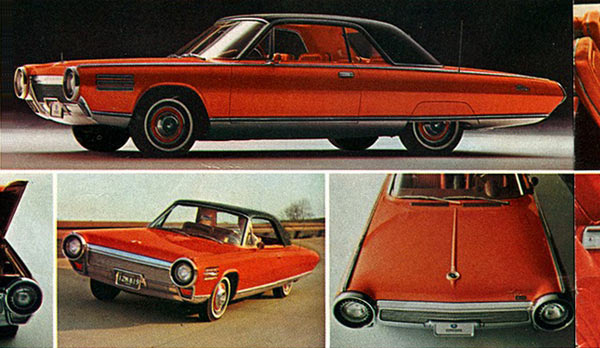
The 51st Running of the Indy 500 set for Tuesday, May 30th, 1967 was one of the most historic before any race laps were ever turned. A wildly innovative car was brought by Andy Granatelli to the speedway in 1967 – the STP Paxton turbine. Utilizing a helicopter jet engine and four-wheel drive, the totally purpose-built car incited as much fear as curiosity in the racing community and beyond. While I was not present to observe this car and the reactions of those around, it is generally noted that the reactions centered around one of two – disapproval for how it could affect the integrity of the Indy 500, or wide-eyed curiosity for what it could mean for the future of racing and production automobiles. 


The end-result however was one of heartbreak and disappointment for Granatelli, STP, and all those who developed and supported it. With just under four laps to go, after leading 170 of the 196 laps, an inexpensive but invaluable part failed in the transmission line sending the disturbingly quiet turbine car to an even-more-shockingly silent end and A.J. Foyt into victory lane for his third time, tying Louis Meyer, Wilbur Shaw, and Mauri Rose for most Indy 500 wins.

Now let’s engage some imaginative thought; just forget the history as it exists and travel down a new path…


The $6 transmission bearing survives another 240 seconds of use and the incredibly wild, incredibly brightly-painted and futuristic STP Turbine, becomes the latest in a rapid progression of innovative cars to win the Indy 500. Rufus Parnelli Jones joins Milton, Vuky, Ward and Foyt as two-time winners of the 500. With the incredible and dominant win, USAC’s attempts to shutter (outlaw) the turbine are met with surprising push-back from manufacturers and fans alike who are excited and ready for jet propulsion as the future of production vehicles. Chrysler, GM, and Ford all rush to begin turbine-powered factory racing programs.  The internal combustion engine soldiers on for another seven years, winning only once more (via the venerable Offy), before going the way of the front-engined chassis at Indy. 

Parnelli goes repeats his wins with two more Indy 500s (in 1968 with the turbine motor and again in 1970, after being recruited by a rival team, ironically recording the Offy’s final win) becoming the first person to win four 500s.  Parnelli subsequently retires from racing in Victory Lane only to join STP Granatelli Racing in 1971 as a team partner and overseeing the Chrysler factory NASCAR jet-engine racing program. 

By the mid-1970s, all major forms of motorsport employ various configurations of smaller turbine motors while production vehicle sales for the first turbine passenger cars off the assembly line are staggering. With surprising initial reliability, multiple fuel options, and quick public acceptance, the ‘jet-age’ is ushered in.  All manner of styling is affected, from clothing to appliances to architecture.

The internal combustion engine soldiers on in rapidly-decreasing numbers in passenger cars but still with primary use in farm and heavy equipment. Never again is the internal combustion engine seen as being near the forefront of propulsion technology.


Perception Is Everything

“There are things known,

and things unknown, 
and in between 
are the doors of perception”
– Aldous Huxley

With a relatively late-in-the-day 4-hour drive home from the Milwaukee Mile Sunday night, and my fully-tired 11-year-old son asleep in the co-pilot’s seat, I had some extended solitude with which to consider my very enjoyable weekend in West Allis, Wisconsin. 

Typically, I’ll stay off Twitter while at a race because I am a big advocate of simply filling your senses with the many inputs received during a race.  This beautiful Sunday, however, tweeting while watching the racing as moments allowed, came much more easily than in other recent events (Indy 500). While doing so, following others’ comments via twitter confirmed for me my belief that the intake of the product in-person and for those not on-site is different and that those differences are quite marked.  I also noted that even at various locations in this relatively small venue, the experience is different. 

Reflecting during my drive I was left with many positives over those 36 hours, but also two crucial items that I believe strongly Indycar must concern themselves with: what the product is and how to best manage its perception (or reception). Since I’ve already written about the existential ennui of Indycar multiple times, I’m going to take aim at how it’s perceived.

During practice and qualifying, I took a seat near the end of the front straight in the front row, just 15 feet away from the cars at speed. 179 mph trap speeds at a range of 15 feet or less is close to mind-blowing, and especially so when watching them negotiate a seemingly-impossible 180-degree, flat-arc change of direction over the next five seconds. 

Much as you have, I’ve seen in-car camera views of them going upwards of 235 mph, but being in-person and so close, even at 180, is the best way to really sense how fast they’re going. For the race, my seats were near the same point of the straight but within 3 rows of the top. Huge difference in perception! 50′ above and approximately 75′ away from those cars (see pic – P = Practice, R = Race). The cars look fairly fast yet fairly benign from that location.


Imagine going from standing on a sidewalk proximity to a 7th floor window view across a four-lane street. Sure the overall view is better, it simply isn’t the same experience in any regard.  I’ve always been an advocate of sitting as closely as possible as it seems in direct correlation with how amazing the sensation of the cars speed is.  

Herein lies my point – Indycar MUST be able to give as many fans as possible this experience. Even if not everyone could sit in Row 1 and see them speeding by, to have this in practice gives a new perspective on just how fast these cars are, even at “just 180 mph”. 

The perception that the racing isn’t very thrilling unless masses of cars are heaped on top of each other goes away quite rapidly when you see just one of these cars ripping by you that closely at speed. You can quite easily see the difficulty of their proposition and to then consider a tightly bunched pack is, in fact, lunacy.

Getting more fans closer access needs to be a priority even in the age of moving fans farther away from the danger. It’s imperative that the fan see just how amazing these cars are and as closely as possible. Finding a way to also get that sensation communicated via a camera to a remote viewer is a challenge even-bigger although the in-car cameras begin to approach it. 


I’ve yet to see the TV coverage from this weekend but I’m sure I’ll be quite amazed at how poorly the sensation of speed comes across. Other forms of racing may be suited for the types of camera angles we’ve seen for decades, but Indycar would do itself much credit to develop an entirely new way of receiving the product for those not in attendance and also figuring out a way to emphasize how being in-person is the best way to see it.

I can’t even remember how many times I’ve said, “TV doesn’t do it justice”.  Perhaps no other sport I’ve attended reflects this sentiment quite as much.

Blow up the decades-old methods of visually presenting Indycars at speed from high above and a wide-angles.  

Give us a view and a sensation that is totally unique and amazing.


Editor’s Note: I’ll have some continuing thoughts on this subject as a guest blogger over at Oilpressure.com tomorrow for the Brainstorming Series.

"I have but one question" – Existential Ennui In The Summer Of Our Discontent


“Now is the summer of our discontent
Made glorious winter by this sun of Anton;
And all the clouds that lower’d upon IMS
In the deep bosom of racing buried.”


In paraphrasing Shakespeare’s Richard III, I am comparing the rise and fall of not only the oft-maligned leadership of Indycar by Anton Hulman George, but Indycar itself. 

It is interesting to me that nobody is more narcissistic or wants to believe just how fantastic Indycar is more than the sport itself, its fans, and its leadership. 

NO-body. 

Hubris, people… hubris.

A fantastic and wildly unpredictable race on Saturday at Auto Club Speedway in Fontana Cali-forn-aye-ay, and subsequent social and traditional media storm in the following 48 hours was as exemplary a modern Indycar event that you’ll ever see. 


If it were possible to quantify this statement, I’d proclaim the 2015 MAVTV500:
 
the single-best, highest-quality, overall Indycar race ever, that was seen and appreciated by the fewest people in modern (post-1979) history.

Talk about exclusive. For better and worse. 

That’s Indycar ‘in a nutshell’. 
It’s in my nature to be inquisitive. Perhaps to a fault. Maybe I should have gone to journalism school and become an investigative reporter, like this guy who brought down the massive FIFA scandal. Journalism bad-assery of the sports variety at its best, but I digress.
I’d like to suggest that the most important thing we might do to help is to challenge ourselves to take a huge step back and look inward at the sport from the outside. I’m talking big, big wide-angle view of Indycar here.

Imagine you are NOT one of the approximate 500,000 (or 00.0083%) humans on this planet who follow Indycar. If you’re reading this, it’s quite likely you are a fan already, but please try. 
~ IF we are to take the leap and assume my posit about the quality of this race relative to the total audience worldwide is fairly accurate, my question is, “WHY?”
~ IF Indycar has such great racing (even applauded publicly by much more famous drivers from other disciplines – via Twitter et. al.), why is it not wildly successful and more popular?

~ Why does Indycar struggle to gain any TV ratings of significance (which, as we know, serve primarily to bolster media ad buys, increase exposure and sponsorship for teams and the league, leading to better financial stability and security)?

~ Why does Indycar struggle with ticket sales in such low demand to the degree that venues have little desire or financial incentive to host a race?

Which, therefore, leads me to wonder – does it matter that Indycar exists at all? 
“Why does Indycar exist and for what purpose?”  

Here’s where I ask for your thoughts. In the comments please try to step waaaaay back from the sport and clearly, concisely, and honestly illuminate your answer for me in one or two sentences/less than 50 words.

I have a thought in mind already, but I want to see what you say.  No snark, no bile, no humor, just honestly and succinctly answer the question.

If the Indycar ownership could also do that for me, we’d be well on our way to solving some things.


The Future is Now


February 25, 2017 – Austin, TX

Good morning everyone from sunny Austin, Texas and welcome to the first on-track open test of the inaugural season of the 2018 RedBull Hypercar Series.

Ever since the purchase of the nearly-defunct Indycar series by RedBull in late 2016 and the subsequent debut of the RedBull X1 chassis as the spec chassis for the new RBHS, fans have flocked to to the internet, track, and television to get their first impressions and follow the development of this amazing “hypercar” powered by a very unique, hybrid propulsion system. 


Fascinated by cutting-edge auto-racing, yet also unhappy with the fractious divides, polarization, and lack of transparency in the governance of F1, RedBull founder Dietrich Mateschitz vacated his teams and money from Formula 1 and devised his own series, and made an audacious offer for the failing Indycar Series that the Hulman and Company board could not refuse.  

The concept for the new series, born out of the twilight of the Indycar Series following the 100th Indy 500, was to open a new outlet for forward-visioning, single-seat, monocoque, single-spec chassis, incorporating a hybrid propulsion of various internal-combustion motors and electrical motor systems. 

Multiple settings will exist for the motors and even can be altered during the race based on strategy and in-race conditions. Teams will be allowed to devise their own fuel of choice prior to the race (from traditional ethanol, methanol, compressed natural gas, or biodiesel) and also their own downforce configurations from the bodywork options as well. 

Paid winnings will also be coupled with a points system including a graduated bonus system for minimal energy input usage.  A baseline for energy units (combustible fuels or electrical storage in the battery configuration) will be established for each race. Teams exceeding the baseline will receive a graduated-scale of reduced winnings while teams staying below the baseline will receive an increasing scale of bonus winnings and points in addition to their placement payout.


The new Redbull Hypercar Series will incorporate sprint and endurance racing, and span two divisions (one each in the South and North American continents) culminating in the Inaugural Championship of the Americas to be held at Circuit of the Americas near Austin, Texas in October 26-28, 2018. Each division of the Series will contest their own race series. Based on the results of those ‘seasons’, each division will produce 8 contestants for the final Championship race with a purse of US$20 million going to the winners.

Several existing racing teams from the former Indycar series have shown up for this weekend’s testing fielding multiple cars piloted with an illustrious list of drivers for the new series.

In the North American Series, 12 events in the US and Canada will be held on a variety of race circuits, and run from May to late-September. The Central and South American series will see 8 races hosted in Brazil, Argentina, and Mexico, with the season running from July to September.

The Top 8 teams from each division will contest the final 6-hour race at COTA with the Champions receiving the all-new traveling RedBull Hypercar Cup Trophy.


The inaugural 2018 season will launch in North America at Mazda Laguna-Seca Raceway on May 5th, with stops at Indianapolis on May 27, Road America on June 9. Night races also feature in the North American series including stops at Daytona International Speedway (road course) in late June, and again in Indianapolis for a 12-hour endurance race on the road course in late-August. 

Excitement and interest in an American racing series has not been seen like this for decades. Citing pre-sales of tickets already well-beyond 50% capacity at many of the venues, RedBull expects the inaugural season to be a success with likely expansion of new divisions to Asia and Europe following in 2019.


The Sex and Genetics of Indycar Fandom


People may be surprised to learn that my blog is written totally off-the-cuff and with no preconceived idea until I get behind the keyboard in earnest. I’ve always done this intentionally to produce something immediate and genuine. Some posts are half-baked, others fully. Today’s post is no different so only you will judge it’s bakededness.

I’m going to just come out and say it: I’ve been enjoying this season of Indycar more than I have in many seasons prior.

The conversations surrounding it, even between previously aligned die-hard fans have become increasingly less comfortable, mostly highlighting more of our very personal preferences and illuminating our differences. It’s beginning to remind me of the various levels of discomfort people have in talking about religion or politics or sex.


In professional sports I appreciate intrigue, variety, uncertainty, and urgency, but also a well-ordered game and consistency in fair play. Not easy to find but is why I have a few beloved favorite sports to the exclusion of many.


Aside from the near-panic that Indycar exhibited in Indy after the practice issues with the Chevy cars snap-oversteering at their limits, becoming airborne, pitching/rolling, and leading to a decision to modify both Honda and Chevy kits in the interest of pragmatic conservation of risk (and, in my opinion, unfairly penalizing Honda), I’ve enjoyed the original concept and subsequent drama and differentiation that has resulted from the aerokits. 

With little drama on the power front, the motors have been prescribed to produce very similar overall power, just slightly different power bands and torque points, but in relation to the differences in aerokits, essentially so similar to not be noticeable.


This season has also added drama off the track for fans (and owners), seemingly producing a significant divide in opinion on the worth of aerokits in relation to the on-track product that we haven’t seen in many years. In the case of some newer fans, they’ve never seen this type of racing atmosphere at all. Love them or hate them, the differences are quite pointed. 

It appears that for people with a marked interest in Indycar racing, you appreciate very specific things: the markers of the distant past – open specs and ingenuity; recent past – single-spec racing (one larger, tightly-bunched packs with minuscule differentiation in performance and aesthetics); or you like more of the current racing – varied-but-similar-spec (multiple, smaller packs with more differentiation in performance and aesthetics).

There is also a longstanding gulf between oval-only fans and those that appreciate some twisties. Sounds like we’ve got ourselves enough traits to make a Punnet Square (hurray for high school Biology lessons paying off again)! Let’s examine what kind of Indycar fan you are..


I’ll admit I’m squarely OI dominant with RI as a recessive trait.

Where do you fall in this? 

Are you and your racing mates compatible?  In some cases, I see how those with opposite results might seem suddenly so foreign to us.

If you have offspring, what will your kids most like?

Insert your tongue-in-cheek, take a little time to be totally honest with yourself, regardless of the environment of the sport today, and think about what you most like, what you moderately like, what you are averse to, and why. 

At risk of making some readers even more uncomfortable, I’ll walk out on a limb even further and suggest that what kind of Indycar fan you are based on this punnet square also correlates to the type of love-maker you are. Do you prefer more “strategy” and “set-up” or rather the lowest-cost, lowest-risk route to “victory lane”?  Is high-speed or accel/decel your game? Perhaps a stretch, but without question more research would be needed to examine that hypothesis further.

Regardless, the key to using this tool is understanding yourself, then employing your time to finding joy in what you like. Indycar fandom or otherwise.


The Greatest 33 – 2015 Post-500 Edition (aka Rambling Indy 500 nerdery alert)


Without deigning to delve into Detroit’s drenched driving debacle, this week’s post will focus on the update to my Greatest 33, post-2015 Indy 500. If you recall the post prior to the race, I pondered how this might change depending on who won, lead laps, and finished in the top 5. Change it did.

After a few very minor tweaks to the formula prior to the 2015 Indy 500, I had reconciled the slight discrepancy in weight of winning versus the other statistics I use to rate the drivers. It had a very slight effect in that by increasing the value of a win and a pole by approximately 10%, relative to everything else, and decreased a top 5 finish by 20%, winning is as important a criteria as ever. Some drivers who’ve enjoyed more success in winning poles, received a slight upgrade, versus those who may have won but perhaps lead fewer laps, or managed a top 5 for example. 

As you may recall, I also have my own “Last Row Party” made famous by the Indianapolis Press Club Foundation members for the rather dubious honor of starting in the last row.  My last row is a specially designated place for the three best ever to have never won. Essentially, I have a Greatest 30, plus three with careers of significance, but lacking that final turn into victory lane.

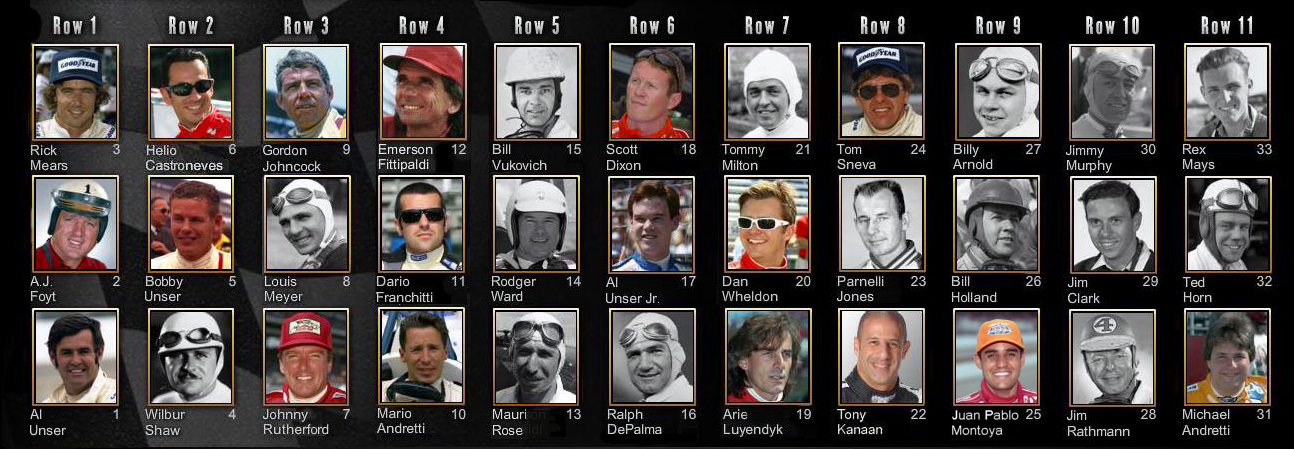
Found as the cover photo on @groundedeffects Twitter, here is my Greatest 33 following the 2015 Indy 500 results:


Here’s a closer look by groups of Rows…


Rows 1 – 3: Unchanged due to Helio not adding a 4th win to his tally.

Rows 4 – 7: With the slight change in scoring Franchitti gains one spot over Fittipaldi by virtue of an additional win, but still so very close overall (4 points or 00.31%) . Bill Vukovich also gained a spot over DePalma and yet another difference so slight (11 points/01.16%) it’s almost a crime either gets the nod over the other. Scott Dixon won a pole, led many laps and gained another top 5 finish. If Dixon had won, we’d be looking at him moving into Row 4 between Mario and Dario. Aside from Montoya, ‘the Iceman’ made the most gains in places (4) from inside Row 8 to outside Row 6.


Rows 8 – 10: Dixon’s upgrade sent Parnelli back into Row 8 and in another quirk of numbers, he also lost a spot to Kanaan who leads by a nearly infinitesimal 3 points (or 00.32%) difference. Assuming Kanaan races in another 500, he will likely surpass Milton, and move out of this group into Row 7. Landing in this group from outside the Greatest 33 is the biggest mover overall and this year’s winner, Juan Pablo Montoya. From a non-descript spot among single-winners, JPM vaults up 21 spots into inside Row 9. Jim Clark also loses 3 very closely contested spots with Bill Holland, Billy Arnold, and Jim Rathmann gaining a spot by virtue of the formula modification. 


Montoya’s promotion also relegates another driver from the list. Did you notice who it was? Unfortunately for his cadre of fans, the bespectacled and thickly-mustachioed Bobby Rahal drops from the list into the great beyond. Perhaps Rahal the Younger will avenge his family’s name and appear once or twice himself. 


Row 11: Unchanged although it is worthy to note that Marco Andretti is the highest rated active, non-winning driver currently. Barring a win, Marco could very likely unseat Rex Mays with just two or three more top 5 finishes or leading another 140 laps. Would two Andrettis cruelly book-ending the futility of the final row be something the racing gods intended?


And my current criteria for selecting these drivers:


Several active drivers were added to my list as they all stand a chance of being part of the conversation should they win a 500. Among the remaining active drivers, Hunter-Reay and Marco are the two leading active candidates who could possibly bump their way into the Greatest 33 grid, the rest will need more than a win to get close to making the top 30.

It’s also noteworthy that at this point, two wins basically solidifies you into the Greatest 33, putting Hunter-Reay in the “first alternate” position. One-timers Mario, DePalma, Dixon, Kanaan, Parnelli, and Sneva all seem to be quite solidly in for the time being. There are more single-win drivers (48) that of all other multiples combined (19),a nd only 10 have made the list, so to be a single-winner and make the Greatest 33, requires an outstanding career. 

Let me know what you think about the latest legacy of The Greatest 33..


We’ve Been Here Before (aka Existential Ramblings)

It’s Indianapolis.

It’s May.

It’s the Indianapolis 500 Mile Race and all that accompanies it.

Speed. Danger. Thrills. Drama.

This Sunday will be my 28th Indy 500.

In light of the recent uproar regarding the on-track incidents of the past week, (largely from those voices with a marginal or myopic understanding at best of the history of this event), it should also be noted that those who can frame last week from a larger, more historic viewpoint, see this as nothing terribly unusual nor panic-inducing as some in the broadcast media might.

The above was my previous post idea in process for today and I’ve since changed my thought process in light of the particularly graphic description by this Racer article that was released today describing the injuries sustained and the subsequent life-saving treatment by the Holmatro Safety Crew of James Hinchcliffe yesterday. 

In times like these when circumstances violently remind us that our racing heroes are in fact mortal, my thoughts seem gravitate to one inescapable truth of auto racing:

No matter how dissonant our love of the thrill, and our dislike for the inherent danger required at the highest levels, auto-racing, and more specifically, Indycar racing, is a brutal sport. Nowhere is it more glorious or more brutal than at its most hallowed ground – The Indianapolis Motor Speedway.

A curiosity surrounding the spectre of death seems to be an integral part of the human psyche. There are many forms of auto-racing but it seems at the grandest of “Cathedrals of Speed”, Indycars racing at Indy have a way of most-markedly forcing us to confront this dark part of our psyche. 

Speed, thrills, crashes, injury, and death represent the long dark thread woven into the otherwise colorful and vibrant fabric of auto-racing. That long dark thread also serves to remind us all that despite machinations otherwise, there is a delicate fragility to life and shockingly so when juxtaposed against those brave ones who inspire the rest of us by risking life and limb. Their risk traded for mere glory and riches. 

I believe I understand the need or near-fixation of many to participate in that arena, but let’s also not forget that they do it, ultimately, because we pay to watch them do it. 

James Hinchcliffe is another in a very long list of those who have exhibited the appropriate skills, weighed the consequences, and assumed the risks in trade for our money and adulation.

“Hinch” is now another in a very long list of those who also have traded sinew, tissue, blood, bone, mental faculties, and life essence in trade for our money and adulation.

Culpability begins at home. 

Culpability begins in the family car, the RV, the Bus, driving to the ol’ Speedway, wearing specially printed shirts and 51-weeks-pre-paid tickets in hand. 

We cannot, as willing witnesses to the immense inspirations of their glory, also selfishly turn a blind eye in their darkest of moments. Drivers, crews, families, and fans are all bonded by the acceptance of these non-negotiable terms.

After all these years, I think only in the last year or two have I reconciled my feelings of immense guilt and culpability when the awful things happen with the immense satisfaction and joy when things go so very right in this sport. 

This Sunday, in Speedway, Indiana, I’ll accept that I’m there to see something amazing and satisfying with the knowledge that I could also, at any point, in any turn, by any driver, see things go horribly wrong. I don’t revel in that thought, but I do accept it. Just as I am there to see amazing, so are the drivers there from a desire to produce it.

Perhaps that is why the reverence for this cathedral and those who’ve chosen to compete there grows in me with every passing year. I feel a sense of duty to return, and to toast with a drink, in celebration of the courage of these racers in their grand success and to exhibit proper reverence in their moments of pain.

May this Sunday be filled with celebration.