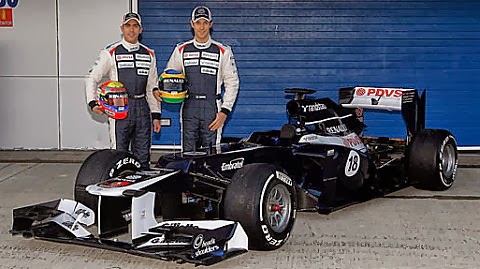
F1 Declares 2012 ‘Year of the Platypus’

The rule changes in F1 for 2012 have created an apparent boon for the automotive plastic (carbon actually) surgeons who all appear to have learned from the same internet school of nose modification. In the name of safety, the noses must be lowered by 7.5 cm to a specified maximum height of 55cm which will help restrict the dangers of a protruding proboscis in a car-to-car incident.


So while Ecclestone continues to reshape the (over-4000 year-old) Chinese Zodiac to suit his legislative agenda, check out this lineup of F1 (ahem) “Beauties” only Bernie could love, in this, the Year of the Platypus:

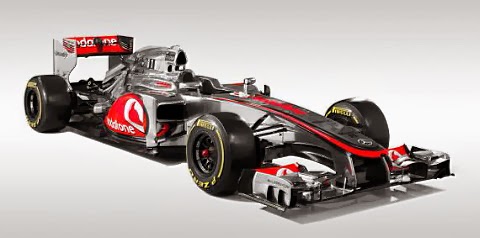
Wait a tick… what do we have here?! 


A non-duckbilled auto for 2012?!  I give you the GroundedEffects (unrivaled) BEST Looking F1 car of the 2012 season… 

Thank you McLaren for doing what seemed impossible by all other designers. If for not other reason but this, I commend you and shall be cheering for your chrome carriage this season. 


Godspeed oh pretty, shiny McLaren, but beware, for the platypus is not only ugly by most standards, but also a venomous mammal that will ruin your Sunday given the chance.

Which of the above contraptions above do you see as ‘beautiful’?

A Personal Appeal from Indycar Uberfans


OK, so most everyone has seen the mighty Rubens Barrichello in the appetite-whetting video of his test in Sebring with the ever-present GoPro cameras, mobile devices, Facebookery, and Tweetering which documents all sorts of action and going-on these days.

A fair bit of radio and print news has also emerged from the trickles and gushes of information from this ‘private’ event. We’ve even seen heretofore unofficial and highly (but not really, apparently) classified performance information from various sources on site in Sebring.

We fans go ga-ga for this stuff, especially on the heels of the demi-official start of the 2012 racing season, The Rolex 24 Hours at Daytona. Our juices have been flowing already this off-season with thoughts of the potential for new juggernauts (or at least some getting-to-know-you drama from learning new equipment).

My point is (and I do have one) that we “uberfans” LOVE (bold,underline,italics) this information!

My fear is (and I do have one) that despite all the assumptions of privacy during private testing, we’re on the verge of seeing a ban on Twitter use (or other such similar outlets) by league and league-related peeps.

Dear Powers-That-Be,
Please don’t.

Sincerely,
FansWhoRespectAndEnjoyTheseRaysOfIndycarSunshineDuringTheOffseason

Looking ahead to 2012…

It’s that time of year my professional line of work (construction) tends to wind down a bit due to weather and, as the snowflakes fall, I want to recall a warmer, more enjoyable time of the year… Late-May.

Looking to Mays both past and ahead, just 168 days remain to departure for the 2012 Indy 500 trip. I begin to think about details and planning and improvements to the previous trip which leads to that monumental answer to the annual question that I cannot pose soon enough…

WHO IS THE CARB DAY BAND?!

Monumental stuff to be sure as I have a fair group of people who are able only to come down for Carb Day and overnight, not the whole of the weekend. 

Plans must be made. Budgets combed through. Proper food and accommodation must be arranged. I take my trip and my hospitality VERY seriously. I also realize the band is very likely not selected at this point, so if the decision-makers are in the house, I’d like to offer my annual suggestions for Carb Day band selection, in no particular order…


On the heels of what was, in my opinion, a (maybe shouldn’t be, yet very surprisingly) great show by ZZ Top in 2010, my standard is found in a veteran touring band with musical chops, extensive catalog and popularity, and ability to easily rock the 19-49 year-old demographic equally. 

I submit for your consideration three HUGELY popular bands currently available in mid-2012:


1. Red Hot Chili Peppers


2. Pearl Jam


3. ABBA


OK, so the third option was facetious but the point could be made that ABBA is equally attractive as your crapcore bands such as Papa Roach or other infamous representative markers of a genre, depending on the audience you are attempting to attract. A broad appeal is always better if sheer volume of traffic is your goal, HOWEVER…I would like to propose an idea which isn’t totally original yet would seem to be a great way to appeal to a more broad spectrum – adopt a single-day/festival approach. 

Instead of a single headline Carb Day band with smaller bands during the Month of May schedule, (of which most have a minor audience), bring that variety of bands (much as you have already) but allow them all to play on Carb Day. Two separate stage areas – one larger stage as we have today, and a smaller one down near the Turn 3-4 area. Have each of 4 to 6 bands play 60-75 maximum minutes with the two stages going concurrently. 

Two bands on the larger Miller Lite Stage is really no different than what exists today, with more popular (read: current) bands, one skewing to the younger set and one to the older demographics. On the smaller stage, incorporate other popular styles such as Jam Bands or other bands representative of different eras (read: Big Bad Voodoo Daddy as swing, etc.). IMS is certainly large enough to house two stages in this manner and the result is very likely a win-win as I see it.

The Indianapolis Motor Speedway has a rich and extensive history. To honor the many traditions and eras as possible on Carb Day would seem to make it a richer experience for more attendees, and also could very well be more lucrative for IMS by charging the paltry sum of $40-50 (or double what was charged in 2011 and 4 times the 2009 rate) for an ‘all-you-care-to-experience’ of Carb Day in the future.

Prediction? Pain.


*edit* This post, begun on August 5th and not finished until today may appear to be a rough bit of ‘piling on’ or ‘givin’ Indycar the bizness‘, after all the hoopla surrounding Race Control’s call at the end of the MoveThatBlock.com 225 yesterday.  I assure you the negative tone of this rant was set following the announcement that the all-new 2009 chassis (which became the 2010 ICONIC competition) became the 2011 safety-cell chassis with aero kits, to be introduced in 2012, is now slated for 2013.  I will admit my tone is enhanced by Sunday’s double-birds and officiating hubris and ‘best justice available’…

Recently a blog commentor, anotherindycarblog, noted some of my off-season thoughts of November 2009, several of which almost resemble something akin to prophecy.  Emboldened by my newfound clairvoyance, I again put it ‘out there’ for the world to digest.


There’s a big ole bunch of Indycar badness headed our way. The size, strength, and threat of this badness reminds me of that fierce antagonist, Clubber Lang from Rocky III. Like Rocky Balboa, the current Indycar lives fairly comfortably on past success and we may or may not know the threat is even there, because our handlers (aka Indycar governors) will be coddling us, shielding us from harm, keeping us ‘safe’ from the very thing they fear, but what Rocky really wants… competition. 


So with no further delay, I give everyone the ‘Tale of the Tape’ for Indycar 2012 and beyond… (*hint* I pity the fools).

Rocky Balboa (Pro):
2012:

– The newest chassis debuts and elicits an overall positive response from fans.
– The new engines are well-received by fans and especially noticeable will be the turbo whine, maximized for the at-race fan’s enjoyment.
– Two historic ovals not on the 2011 race schedule come on board to fans’ delight.
– Two road/streets on the 2011 schedule DON’T come back to fans’ delight.
– The Indy 500 TV ratings are higher than they’ve been in 18 years, largely due to the added hype of the 2012 chassis, Danica’s return to Indycar for her one-off, and increased speeds at Indy which will approach the upper 230s during the month of May. The enthusiasm follows to the next several races as all of them enjoy double-digit increases in TV viewership and Ticket sales.

2013:

– by early 2013, we will have exactly three different manufacturers of aero kits for the 2012 chassis, which will be ballyhooed by what remains of Indycar’s PR machine.
– by late 2012, a third engine manufacturer will be testing adding a bit of momentum for the spring of 2013.

Clubber Lang (Con):
2012

– Danica leaves for NASCARland and things get seriously rainbows and kittens for her financial and retirement portfolio, in addition to finding that she actually prefers the slab-sided vehicles to the Indycar. Fans embrace her there and NASCAR’s popularity, judged by most common measures gets a double-digit uptick. NASCAR’s gain, Indycar’s loss once again.
– Nothing will change the presence of the ‘ride-buyer’, although part-time driving schedules will lead to even less success than in the ‘UberSpec’ 2003-2011 era.
– Barnhardt will remain in the Race Control supervising tech, but Indycar will shuffle in a new race steward who will fare little better as race referee, despite a much ballyhooed nomination to the post. More disillusionment with the leadership of Indycar ensues.
– The 78% of Indycar fans who aren’t on Twitter (and thereby don’t follow @pressdog or @oilpressureblog or @SBPopOffValve) will only now realize all the 2012 chassis are all EXACTLY THE SAME, question the absence of different chassis, and become disenfranchised (AGAIN) with Indycar’s governing ineptness. This group fractures into people who; begin watching WRC online, or foster their newfound interest in ALMS, largely due to the shockingly incredible performance at 24 Hours of LeMans by that Delta Wing thingy (Hey, why didn’t we get that thing for Indycar?).
– The 2012 motors, despite their well-received sound will all prove somewhat inconsistently-powered and somewhat unreliable. Fans of ‘three cars on the lead lap at midway’ or of ‘late-race motor-blowing which induces violent race standings shuffles’ will rejoice. Owners of said motors will not and publicly lament the loss of the yawn-inducing reliability of the Honda V8, (much to the dismay of Indycar PR).

2013:

– the two additional manufacturers of 2013 aero kits finally enter the Indycar stage but will all look so amazingly similar that it triggers a violent and palpable *ker-THUNK* as ICONIC’s decision for aero kits coupled with the Indycar owner-induced delay falls tremendously flat with nearly all Indycar fans. Many longtime fans will shake their heads and consider this the final-FINAL straw and leave for good.
– After numerous ‘lead balloon’ decisions and the Centennial Era a fading memory, Indycar is in a delicate state left with fewer fans than in 2011, a fractured TV coverage package, declining ratings, and a CEO teetering with his sport on the brink of total collapse…  Very hard decisions must be made… 


To continue to fight or retire? 


The Singlemost Factor in Appreciating INDYCAR over NASCAR

NASCAR’s revision of its points system, and the reaction to it, has returned me, like the swallows to Capistrano, to my very core base of appreciation for INDYCAR. Screaming typographics aside, the debate of on-track action between INDYCAR and NASCAR for this writer has always boiled down to one very simple inherent element – open wheels.


In reaction to the points system changes in NASCAR, driver Clint Bowyer states, 
“…you’re out there giving it 100 percent, you’re out there to win the race 
each and every week anyway, but you’re not going to 
step underneath somebody if you’re loose 
and you know they’re going to make you even looser. 
You’re not going to try to make that pass for 
a fifth place and take a chance of finishing 35th.”


Recollecting the ‘mosh-pit’ nature of action often found in a stock car race, there are some who will see it as Bowyer does, encouraging more caution and conservatism to attain the precious points for your season, seemingly reducing the impetus to race. One wonders if this also allows for backmarkers and multiple-car teams to play a more significant role in the system. I certainly don’t have any immediate suspects, but one could see how a car suffering misfortune early and dropping back to 32nd place could roll around out there until the opportunity presents to, er.. ‘assist’ a teammate by impeding or (dare I say it?) ‘chrome horn’ an opposing car out of contention (that doesn’t really happen, does it?).  Tongue, meet cheek. 


The ability to ‘bump and grind’ and ‘loosen-up’ and ‘slide-job’ and ‘soldier on’ after repairs (and all those other wonderful stock car colloquialisms) certainly allows for this to happen. Perhaps that IS the very nature of that form of auto-racing which makes it popular with so many.  For others, this isn’t racing at all which brings me to my point (yes, finally).


INDYCAR (or Indycar as I like to call it), from it’s inception, has the simple and inherent beauty (and violent danger) of being an auto-racing form which has vehicles specifically featuring open-wheels. No fenders means no ‘grind-bump-draft-slide-job-loosen-sheet metal repairs’. 


‘Open wheels’ means a pass must be judged and made skillfully or the penalty for locking wheels often takes both drivers, and even others, out of the race (or sometimes on a tragic occasion even out of this life). To this writer, this is, and has always been, the singlemost reason why I appreciate the sport of Indycar more than any other form of racing. 


Formula 1, it can be argued, contains the highest level of technology in a similar open-wheel format, but due to their European origin on street and road courses, it’s oft-turned and rapidly-deccelrated wheels requires primary skill in braking and turning and never reaches the overt and thrilling speeds (or passing) found with Indycars on ovals. NASCAR had speeds sometimes approaching the relative ballpark of Indycars (albeit many years and restrictions ago) on matching ovals, but all too often relies on less-sporting driving skills and tactics, and certainly aren’t also made very well for going left AND right as Indycars will also do.


I am fully aware that success in NASCAR also requires a skillset, but in my view Indycar has always represented the apogee of where extreme speed meets sporting skillfulness. I also believe that once seen in this light, Indycar has no equal in what it provides to its audience. Only then does one begin to truly understand the heritage and legacy found in its 100 years of racing.


The latest chassis (and engine) rules for 2012 have embraced this heritage by allowing this primary element to remain, yet not allowed private technology budgets to attempt to dictate the competition. This is why INDYCAR is still my preferred form of auto racing and why so many, who’ve yet to cast an eye on it will appreciate it as we, the dedicated, do.


Nearly every year since my third Indy 500 back in 1988, I’ve brought a person who has never seen an Indycar race (or in some cases any auto-racing event) to their first Indycar race only to have them be amazed at the sounds, smells, sights, speed, and atmosphere of it all. I’m glad to have passed this along to my friends as my father and mother did for me back in 1979. I intend to do it again this year and challenge you to bring at least one ‘newbie’ to a race in 2011, as there is truly no substitute for the experience.

D(ecision)-Day: July 14, 2010

Taken from a comment posted by yours truly on another blog owned by the one and only Jack Arute, in response to the impending ICONIC decision regarding the 2012 IndyCar chassis regulations:
“It would seem, on what could be the very precipice of the most critical decision in OW history, that what the fan wants has not changed one iota over the last 30 years – a symbol of progress and glimpses of the technology of tomorrow.
LONG gone are the days when ever-increasing speeds (at Indy) at all costs meant progress, and I’d have to say despite the yearnings of a vocal minority who long for that past, to try and return to that previous time would be a monumental step backward.
Tomorrow will by many accounts be a time of new energies and technologies. Many on either coast may envision a time without autos, but the 44-46 other states in between them would have a different story. The automobile will never disappear, but again become the symbol of innovation and IndyCar can once again lead the way by embracing multiple propulsion systems. I’m talking about cellulosic ethanol and diesel, hydrogen, electric, whatever…
True innovation for the future through racing would seem to comprise the ability to develop the most powerful engine that uses the least amount of fuel over a given distance. To me the chassis is secondary in this formula albeit one that could also use innovative design to increase the ability of the engine.
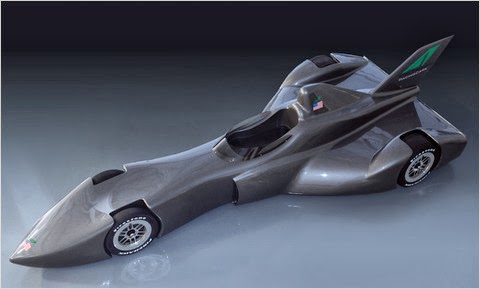
This is where the Delta Wing seems to have been right on the money. As much as I prefer a time when an IndyCar “looked like an Indycar”, that time may be over and to eliminate the DeltaWing from being part of the competition, would seem to be delaying the inevitable future. I’m not a big fan of the looks of the DW, but it’s innovative concepts are certainly intriguing. 
I say give it a chance. No one will be laughing if Roger Penske ends up plunking his money down on it and wins with it now will they?”
My assessment of the engine package was that the “opening” of the specifications was a timid toe-dip into the pools of the unknown. A far more open and broad-ranging propulsion equation would’ve been what I’m looking for, something akin to the existing ALMS regulations, specifically the Green-X Challenge.  At any rate, to me the answer from the fans couldn’t be more clear, “Men and women of chassis engineering – welcome to the IZOD IndyCar Series, have at it!”

Living With Disparity.

I blame the NFL for ruining IndyCar.

The NFL has produced a model of professional major-sport competition so successful at being even-handed, it dares all other sports to match it. Baseball can’t touch it, Basketball’s popularity has fallen immensely, Hockey all but disappeared after their lockout season.  LOCKOUT SEASON?  Anyone remember a cancelled World Series?  Even one of the mightiest world sports – Football (yes, I mean Soccer, or shall I use ‘Futbol’ for clarity?), has major issues with where competition, revenue, and payroll all come together.

As much as I support equity through rules to enhance the product of competition, this model simply does not work in its current form for racing. The NFL is about direct person-to-person combat, and the management thereof. So similar is the mighty Futbol. They have inherent drama on a daily basis (I contend it is because EVERY game or match means something, but that is for another discussion). Racing is about one-up-‘person’-ship and the advancement of technologies. There’s nothing inherently fair about it.

I appreciate the IndyCar series for attempting what no other racing series had prior – make it as fair as possible for all who choose to participate. Never been done before. Scoffed at by the establishment. Ridiculed by those who represented the status quo. Ultimately adopted by other leagues who rely on weekly TV ratings for support. For this attempt at equity, I think Mr. Tony George can be commended.

Now in the matter of months since the last Indy 500, he’s nearly gone from the landscape (save for a beautiful facility called Indianapolis Motor Speedway), and the series seems energized with new drivers and ascending teams, but the time has come to look hard at the future of IndyCar and its essence.

As I think about all of the racing I’ve watched and what seems to touch racing fans the most is the ever-changing shape ‘of things to come’ (meaning ingenuity and forward-thinking) and the human-dramas that emerge from competition. Racing from its inception has been about being a working and competitive laboratory for various companies of the automotive industry. As we’ve seen in the past 25 years or so, it also can be used to promote unrelated consumer products and services through the mass media who use the human-dramas to capture the attention of the viewer.

Herein lies the question of seemingly divergent forces – is racing for development of the companies (of the automotive and related industry), is it for the entertainment of people (events/media coverage/ratings/sponsors/consumers), or can there be a suitable place where both of those forces can exist?

At its best, racing provides the thrills and excitement and inspiration of witnessing never before seen things, history in the making, and humans performing incredible feats of daring and skill right before our eyes. At its worst, racing is a platform for socio-economic elitism, dynastic control, and even the spectre of horrific death.

F1 provides some incredible feats of automotive technology at great costs, but often the on track product leaves observers at a loss for enjoyment. It also attempts to cater to a worldwide audience.  NASCAR has become truly little more than rolling billboards combined with all the dramatic performances of professional wrestling. The LeMans (and American LeMans) Series seems to blend the best of the two worlds – the racing of production-based cars and high-tech rolling automotive laboratory subjects. IndyCar would do well to fit between the automotive ingenuity and entertainment of ALMS, the pseudo-hype and over-saturation of NASCAR, and the cha-ching of F1 budget spending. 

“So then if ALMS is already doing it, why should IndyCar do it?”  A good, hard, and fair question. Part of me loves that IndyCar is steeped in the tradition and history that goes back 100 years, but does that mean it has the inherent right to survive? My answer would be ‘no’. My answer would be that, for IndyCar to survive it must evolve and by this I mean possibly partner with ALMS for the survival of all concerned. They already race on similar tracks, using similar parameters for performace, and have some of the best drivers of the world. Audi is already seeing the value of a LeMans victory and the technology used to promote its cars with great success. IndyCar could be on the forefront of the American automotive manufacturing revolution about to land on this country if it so chooses by adopting a similar set of rules, but by maintaining its open-wheeled chassis structure (and heritage). 

“What about the American oval course tradition?” As much as I hate to say it, but sorry folks, NASCAR won the battle of the ovals.  ‘Left-only’ racing in the U.S. of A. pretty much belongs to NASCAR for now. All but the glorious Indianapolis 500 and a few tiny dirt and asphalt tracks that dot the map of America.  Those famed tracks used to be the training grounds for a shot at glory in the Indy 500. That used to be the case, but that seems to have begun disintegrating in earnest somewhere in the mid-1980s. Much like LeMans or Monaco, the Indy 500 is truly an event, a grand event, perhaps the grandest of them all, but a series it does not make. Perhaps a very limited selection of great old ovals is all that should be saved on the schedule. Indy, Milwaukee, Pocono, Phoenix, Michigan (Pocono unlikely to host a race and the latter two currently owned by the NASCAR empire). Time and money have already eliminated too many historic greats such as Ontario and Nazareth. 

“So what’s next?”  I wish I knew. Parts of me are happy with the way things are actually: a basic entertainment-based series that has excellent drivers and competition and the Indy 500 to which I hope I never am forced to miss. Part of me wants things to evolve as well. Do I think the Delta Wing will be the savior? No. New chassis and engine package? maybe will help a little. Once upon a time way back in 2003 or so I think, I floated an idea on several racing boards with no real feedback. Perhaps now is the time…

My idea was (and I still think it to be a good and fairly simple one as it stands today) to have a Triple Crown of IndyCar racing: one Crown for points accumulated on ovals, one Crown for streets/roads, and one overall Crown for ‘The IndyCar Champion’. This would allow smaller budget teams to race aggressively on just ovals (and re-tap into the legions of small trackers all over the country), or twisties with their own following, as they so choose or budget will allow.  

The big debate about the best overall would be settled (or not) via the overall champion.  Each crown would carry an individual sponsorship (i.e. Miller Beer for Ovals, Heineken for Roads) which pays each winning team a tidy sum and the Overall Champion would get a big, fat cardboard check from IZOD as it would stand currently.

I certainly don’t envy what Mr. Bernard has gotten himself into, because there is a significant chance that with the new chassis rules forthcoming, the good-new days of equity and price-fixing may be coming to an end for the sake of variety and ingenuity.  At any rate, here’s to hoping he finds all of us a way out of the dark and into a nice, healthy IndyCar for years to come.

Fortune Favors the Bold

Times are changing and, with regard to the IndyCar world, it is no less apparent than on the cusp of this new 2010 season, with new League Title Sponsor IZOD fully activating itself all over the IndyCar landscape. This momentous season will begin on another continent, in another hemisphere (Brazil) and with an other-worldly story playing out concurrently with the racing: this season will see the developing changes to the most identifiable element of the sport itself – the Indy Car.

Tweets, blogs, articles, and message boards have been energized with the recent preliminary chassis designs by four manufacturers and one… designer(?), all of whom will vie to become the next IndyCar chassis slated for 2012. Much debate has already occurred since the early days of February when Dallara (incumbent chassis manu), Delta Wing, Swift, Lola, and finally BAT all had turns at revealing their preliminary concepts. 


Then, there’s Maude:

Unveiled at the Chicago North American Auto Show, this stunner seemed to leave mouths agape and searching for proper descriptors, of which few were found. To many, this potential design was neither ‘IndyCar’ nor attractive. Infuriating and repulsive to a web-vocal bunch, yet supported by those who would actually be responsible for the purchase and use of such machines. I’ll admit my skepticism was running high at first blush, until I put away the emotion and became interested enough to spend some time reading ‘Why?’. The factors and criteria which led the Delta Wing team to this point became more illuminated after reading the method behind the madness. With so many comments and thoughts swirling around IndyCar at this point, I doubt I’m saying anything that has not already, however, it is my opinion, as a fan of well over 30 years, that this opportunity, at this time, will be the defining moment of the sport’s survival or plummet into obscurity.

As a longtime fan, I’d rather not see such a great American institution as the Indy 500 and the sport, with a storied lineage so rarely found in this country, lost at the short-sightedness of a few. The time is right for something as truly inspired as the DeltaWing. The time also is right for inclusion of multiple propulsion systems. Vast freedoms of propulsion, with the limits set by efficient use of power, not by sheer power itself.

This opportunity has presented itself to be something new, exciting, and relevant. Right here, right now. Draw a bead and pull the trigger IndyCar, before something else draws faster. You can only be too late, never too early.

Random Indycar Thoughts

Random Indycar Stream-of-Consciousness-of-the-Day:

1. Sarah Fisher has officially won me over as favorite Indycar team owner.  Oddly, had she not gone through all the sponsor crap and race misfortune from May 2008, I doubt she would have reached the level she is today.

2. Relatedly, I have a recurring thought/dream that keeps nagging – Tony Kanaan, sick of the Andretti Team drama leaves Andretti Racing and joins Sarah Fisher’s team.  99.875% sure this will never happen, but I get the feeling he was so sincerely sympathetic to how much he (and his spin in front of Sarah’s car causing their May ’08 Indy 500 collision) affected her entire program and life.  He decides that her story and modus operandi for the fledgling Sarah Fisher Racing program is suitable to his genuine and honest hardworking personality.  TK and SF, BFFs.  OK, maybe too Hollywood.

3. 2012 racing machine specs – Allow alternate propulsion systems for Indycars mated to a single, approved chassis.  Lead the way into the new automotive technologies instead of lagging it… ahem NASCAR.
4. Pay Shaquille O’Neal to become official SuperFan of the IZOD Indycar Series.  Allow him to render any or all of his awesomeness to promoting the series.
5. Allow Danica to go to NASCAR without any fanfare either positive or negative.  This league existed before her and will exist after (see Sam Hornish, Jr.).
6. Give 5 random fans at every race a free 3-lap ride around the track in the two-seater car driven by an Indy legend.  Make sure this is done on raceday, prior to the race start.
More thoughts to come…